open.lens
open.lens
open.lens
Overview
Overview
Digital Fabrication
Digital Fabrication
Open-Source
Open-Source
Hardware Hacking
Hardware Hacking
open.lens is an open-source, hybrid digital magnification system that pairs vintage analogue camera lenses with repurposed webcam sensors on a modular 3D-printed and aluminium frame, democratizing access to high-precision optics through technological upcycling and ergonomic, distributed design
Context
Politecnico di Milano
Politecnico di Milano
Year
2026
Discipline
Product Design
DIY open-source precision magnifier
DIY open-source precision magnifier
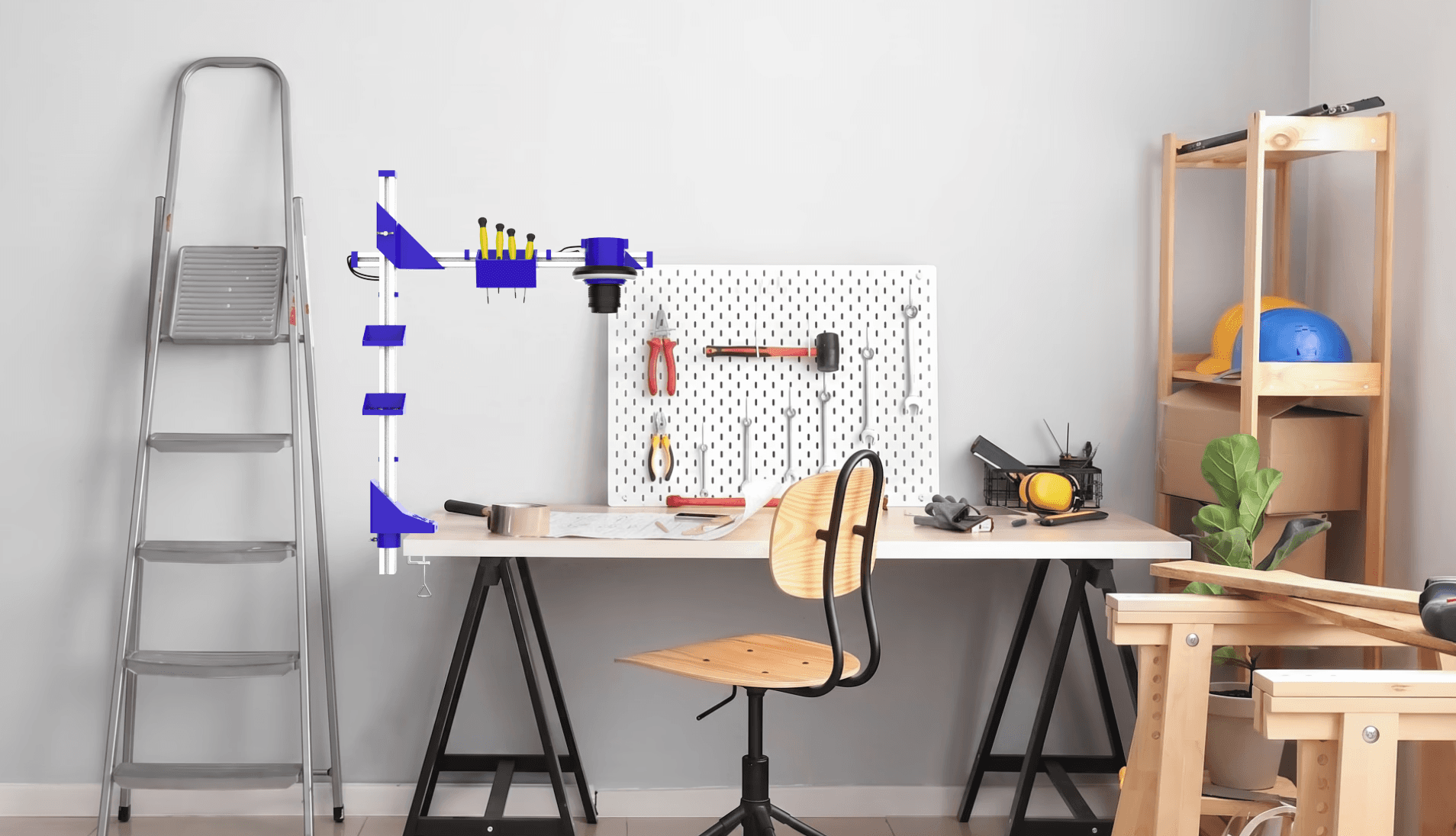
DIY open-source precision magnifier

Challenge
Challenge
The brief called for exploring hardware hacking not as an act of breaking, but as a generative design methodology. Inspired by hacker culture, the challenge lay in deconstructing existing objects and components to radically reimagine their potential. This required a shift toward extreme resourcefulness: rather than designing from scratch, the process began with what was already available, subverting original functions to augment human capabilities and toolsets. The core task was proving that by hacking established systems, design can bypass conventional limitations and create entirely new functional value.
The brief called for exploring hardware hacking not as an act of breaking, but as a generative design methodology. Inspired by hacker culture, the challenge lay in deconstructing existing objects and components to radically reimagine their potential. This required a shift toward extreme resourcefulness: rather than designing from scratch, the process began with what was already available, subverting original functions to augment human capabilities and toolsets. The core task was proving that by hacking established systems, design can bypass conventional limitations and create entirely new functional value.


Result
The outcome is open.lens, a fully open-source, hybrid digital magnifier designed to democratize high-precision vision for artisans, technicians, and makers. By pairing discarded analogue camera lenses with webcam sensors on an adaptable modular frame, the resulting device provides professional-grade optical performance at a fraction of commercial costs. Featuring adaptable workbench mounting, it delivers a transparent, repairable alternative that challenges planned obsolescence through distributed design.
The outcome is open.lens, a fully open-source, hybrid digital magnifier designed to democratize high-precision vision for artisans, technicians, and makers. By pairing discarded analogue camera lenses with webcam sensors on an adaptable modular frame, the resulting device provides professional-grade optical performance at a fraction of commercial costs. Featuring adaptable workbench mounting, it delivers a transparent, repairable alternative that challenges planned obsolescence through distributed design.


How It Works
An old camera lens focuses light directly onto a reused webcam sensor, sending a live, magnified video to an external screen or phone. Users can easily change the zoom level by adjusting the lens's focal length and sliding it closer or further from the sensor, while the adjustable frame allows quick positioning right over the work table.
How It Works
An old camera lens focuses light directly onto a reused webcam sensor, sending a live, magnified video to an external screen or phone. Users can easily change the zoom level by adjusting the lens's focal length and sliding it closer or further from the sensor, while the adjustable frame allows quick positioning right over the work table.
Configurations
open.lens easily reconfigures into three versatile setups using the same core components: Crane Mode, clamped to the workbench with a rotating overhead arm; Frame Mode, a portable, self-supporting structure resting directly on the tabletop; Arm Mode, fixed to an upper shelf to leave the work surface completely free.
This flexibility ensures the tool adapts to the workspace rather than forcing the user to compromise their layout.
Configurations
open.lens easily reconfigures into three versatile setups using the same core components: Crane Mode, clamped to the workbench with a rotating overhead arm; Frame Mode, a portable, self-supporting structure resting directly on the tabletop; Arm Mode, fixed to an upper shelf to leave the work surface completely free.
This flexibility ensures the tool adapts to the workspace rather than forcing the user to compromise their layout.


Sections and Components
The system is built on a modular architecture divided into structural, mechanical, and optical sections. Standard aluminum profiles form a rigid, easily adjustable framework, while custom 3D-printed parts house internal mechanisms and secure the optical core using domestic desktop printing. All assembly relies on readily available off-the-shelf hardware, such as standard fasteners and sliding nuts, ensuring the device remains low-cost, easily sourced, and fully repairable.
Sections and Components
The system is built on a modular architecture divided into structural, mechanical, and optical sections. Standard aluminum profiles form a rigid, easily adjustable framework, while custom 3D-printed parts house internal mechanisms and secure the optical core using domestic desktop printing. All assembly relies on readily available off-the-shelf hardware, such as standard fasteners and sliding nuts, ensuring the device remains low-cost, easily sourced, and fully repairable.
Genova Design Week 2026
Genova Design Week 2026

Genova Design Week 2026


Whether you have a project in mind, a question, or just want to say hi, feel free to reach out!
© Crafted in Framer by Andrea Contrafatto
Milan, Italy